
I’ll be honest: when I decided to visit Tunisia as a solo female traveler, I was a little apprehensive. So I went with the safest option: a fully organized day tour. For 99 euros (entrance fees and lunch included), I got a guide, a driver, and a packed itinerary that took me through Tunis’ medina, the stunning Bardo Museum, three archaeological sites at Carthage, and the impossibly charming town of Sidi Bou Said. Here’s how it all went down.
Exploring The Medina Of Tunis
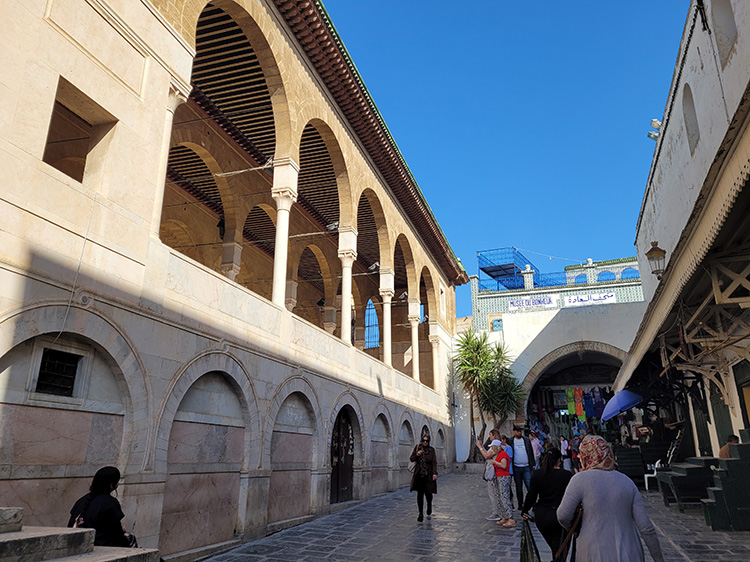
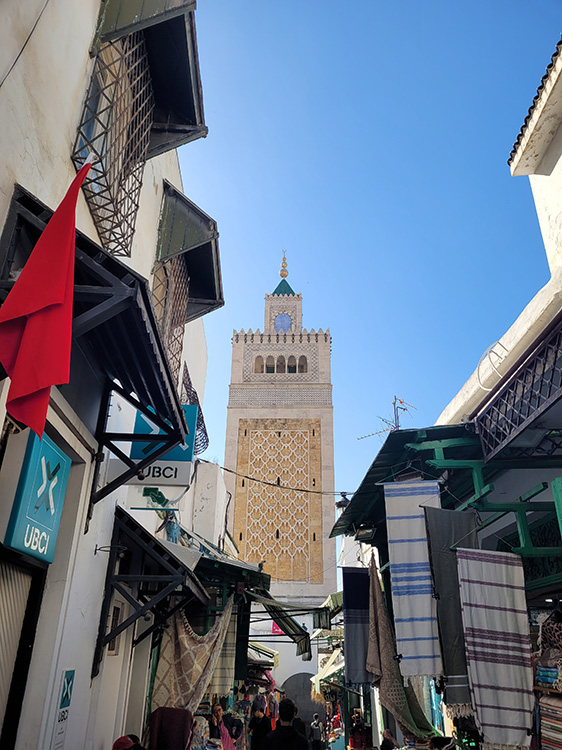
My guide picked me up at my hotel on foot, and we headed straight to the medina. Our first stop was the Zitouna Mosque. I had read glowing descriptions of it online and in books: “extraordinary”, people said. The reality? Pretty, but tucked so deeply into the medina that I would have walked right past it without a second glance.
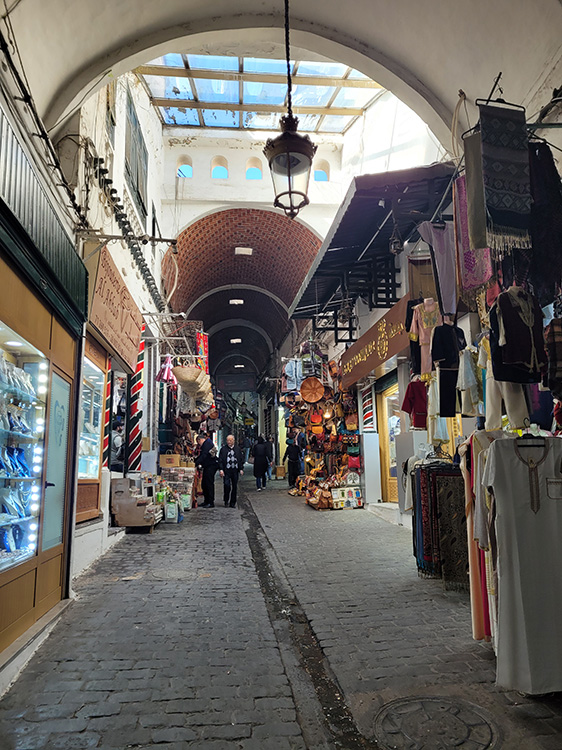
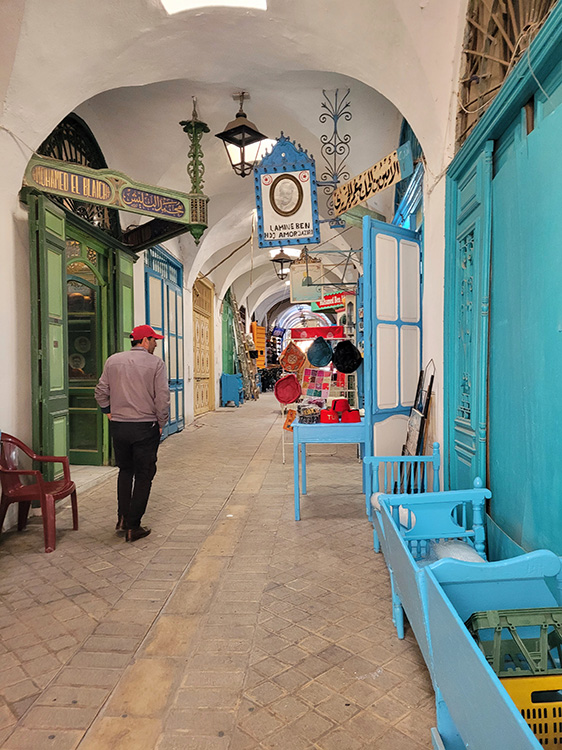
What I loved more was just wandering the medina’s streets, sometimes open to the sky, sometimes covered, like a Tunisian cousin of Istanbul’s Grand Bazaar. At one point, we stopped by a vendor selling makroud, a small pastry made from semolina and date paste, then dipped in honey. The vendor offered me a taste, and before I knew it, I was walking away with a whole box. I didn’t plan on buying anything (carry-on luggage, people!), but I truly could not say no.
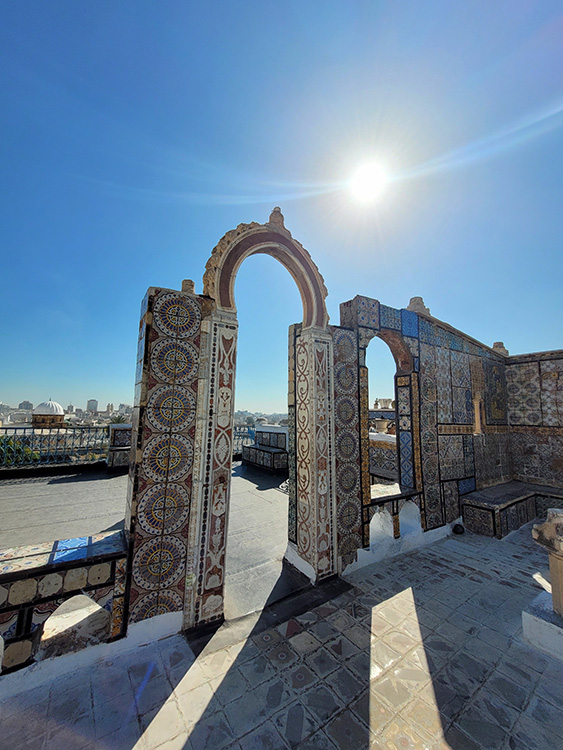
We also ducked into a shop and climbed a narrow, colorful staircase surrounded by carpets, emerging onto a rooftop terrace with a beautiful view over the city. That moment? Absolutely worth it. Slightly less worth it: a spider that dropped into my shirt on that same terrace. I shook out all my clothes. Never found it. I hope that it took its business elsewhere.
A nearby perfume shop offered the full jasmine treatment: white, black, the works. The vendor put some on my wrist and gently suggested I take a small bottle home. Tiny, no space, not expensive, excellent quality… My answer was no. Both he and my guide looked mildly disappointed.
We finished the medina loop at the Place des Martyrs, where Tunisian flags lined every street. Indeed, the day before, April 9th, had been Martyrs’ Day, a national holiday.
The Bardo Museum: A Jaw-Dropping Collection Of Roman Mosaics
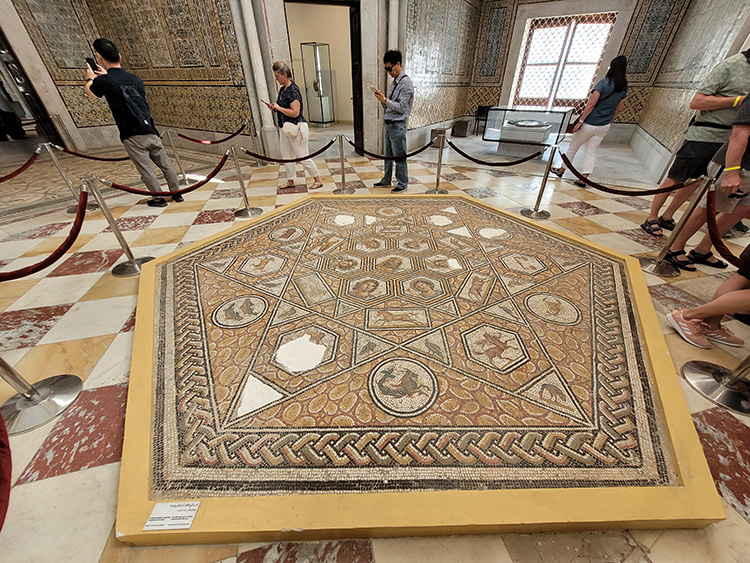
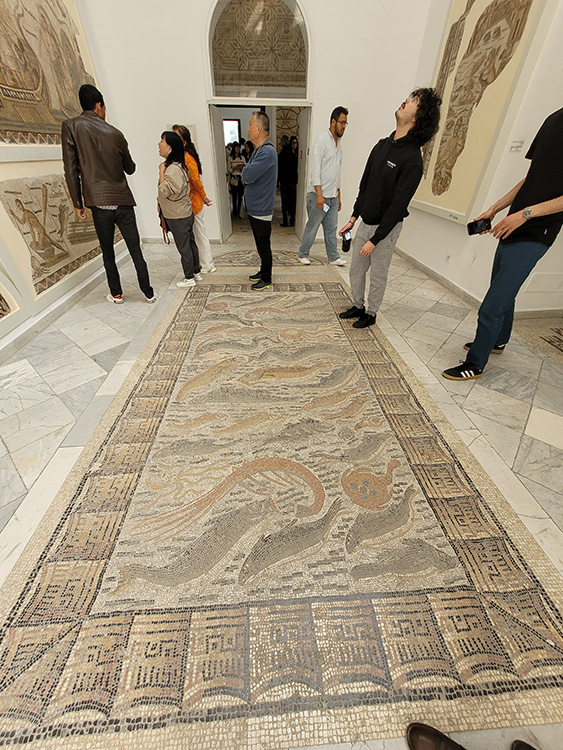
If you visit Tunis, do not skip the Bardo Museum! It is the largest museum in Tunisia and home to one of the finest collections of Roman mosaics in the entire world.
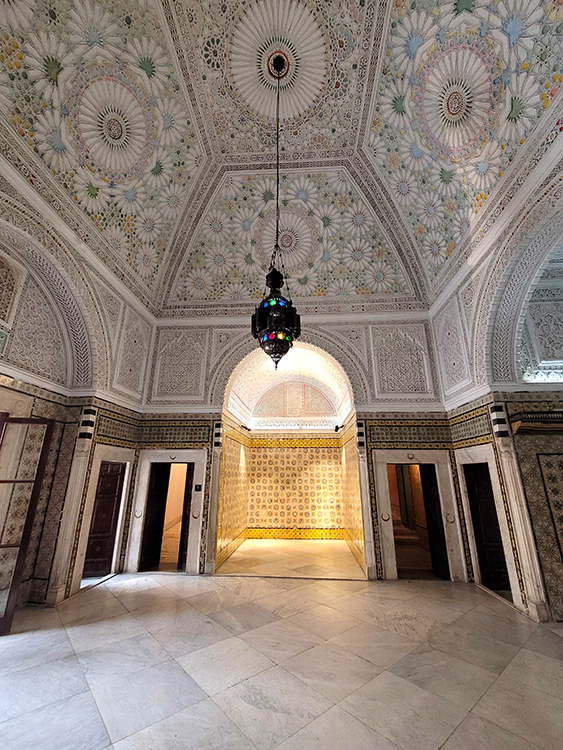
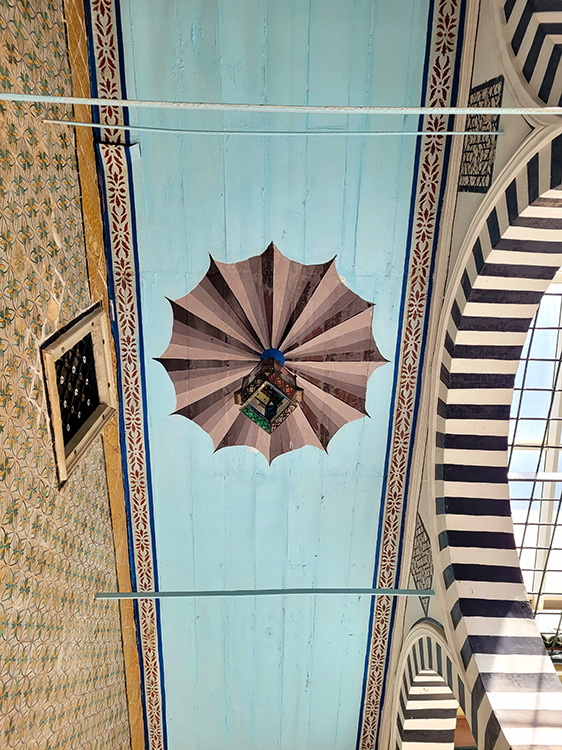
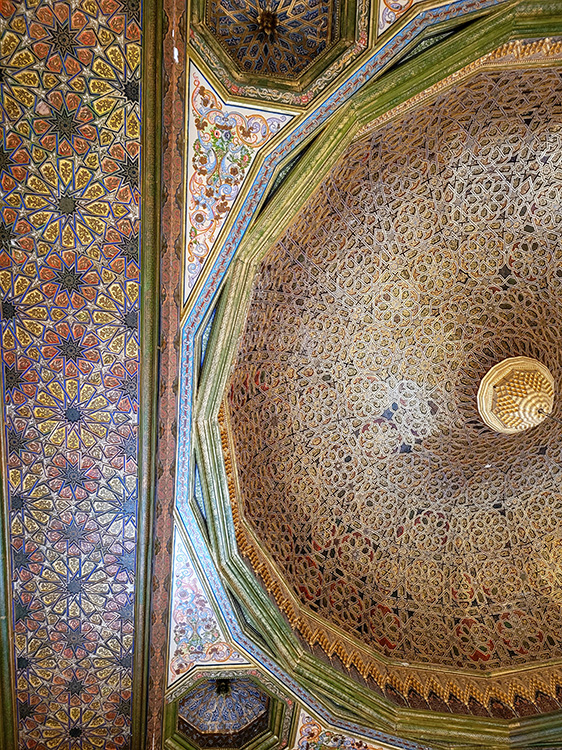
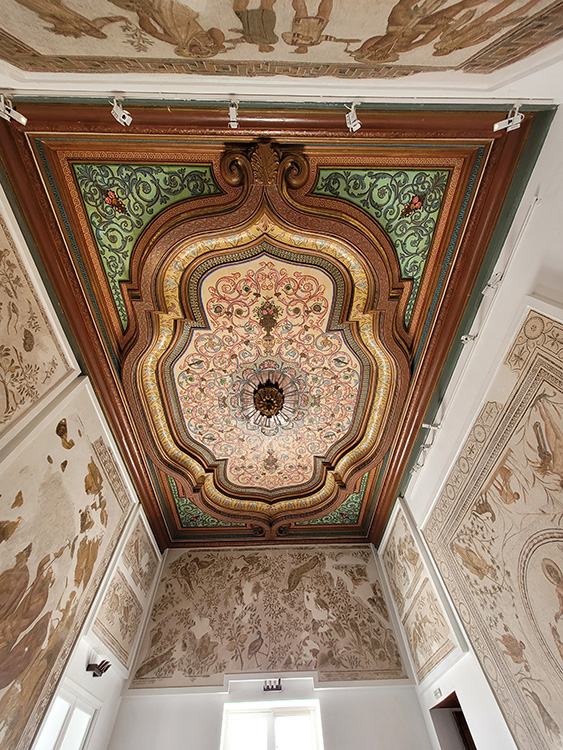
But it’s not just the mosaics (though they are spectacular and remarkably well-preserved). There are also statues, baptismal fonts, objects unearthed during excavations, and rooms that take your breath away. The reason for that is that the museum was built inside a former palace, and the ceilings are absolutely extraordinary!
My guide walked me through the most important pieces and explained the context, then stepped back and gave me free time to explore at my own pace. That balance was perfect. The museum is large, but I never felt rushed. I came away feeling like I’d actually seen it, not just sprinted through it.
Three Sites Of Ancient Carthage
Our first Carthage stop wasn’t even on the official plan: my guide figured we’d swing by the old amphitheater since it was on the way and I was the only person in the car. It required quite a bit of imagination to picture what it once was, since very little remains standing. I took exactly one photo. Some ruins speak for themselves; this one really needed you to close your eyes and envision.
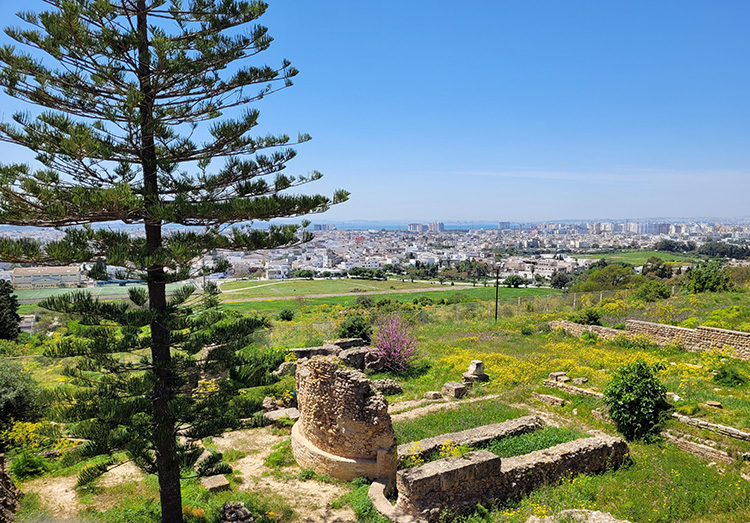
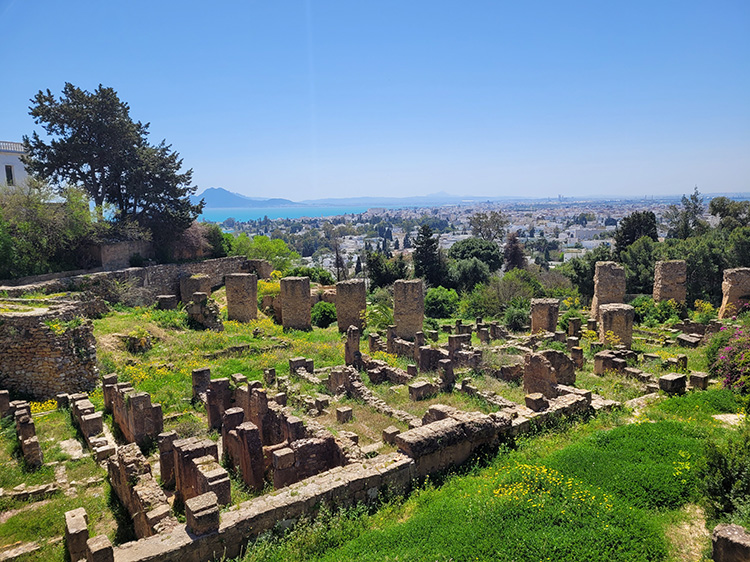
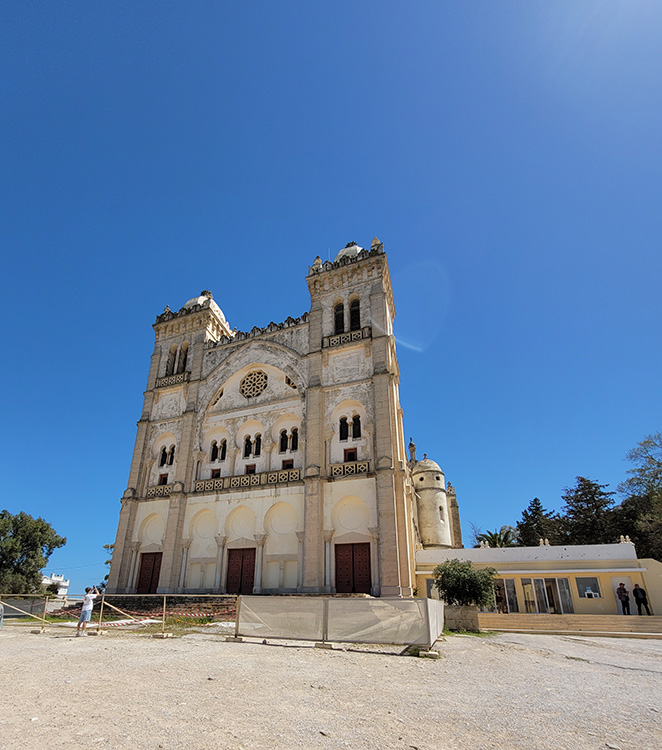
Next up was the hill of Byrsa, where we explored the ruins of a temple, a forum, the remains of the Punic quarter below, fragments of an aqueduct, a cenotaph, and a statue of Saint Louis. There’s also the Cathedral of Saint Louis of Carthage, which is genuinely impressive. And yes, all of Carthage is a UNESCO World Heritage Site, so you’re walking through layers of history with every step.
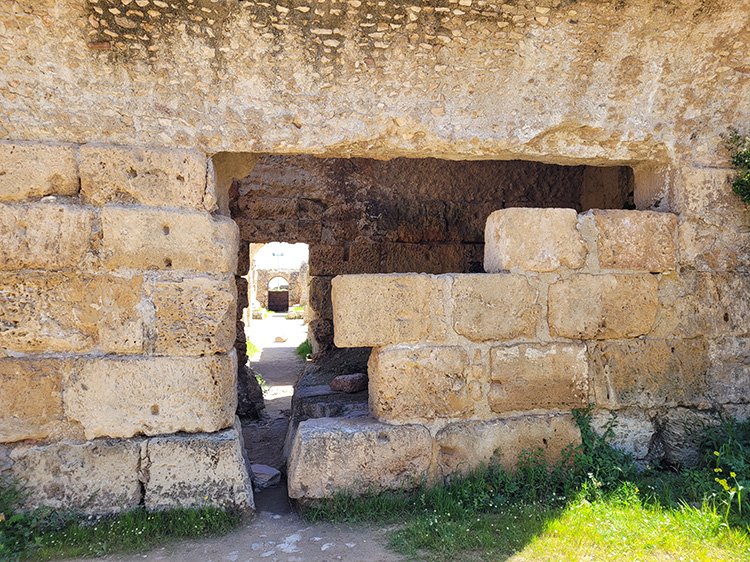
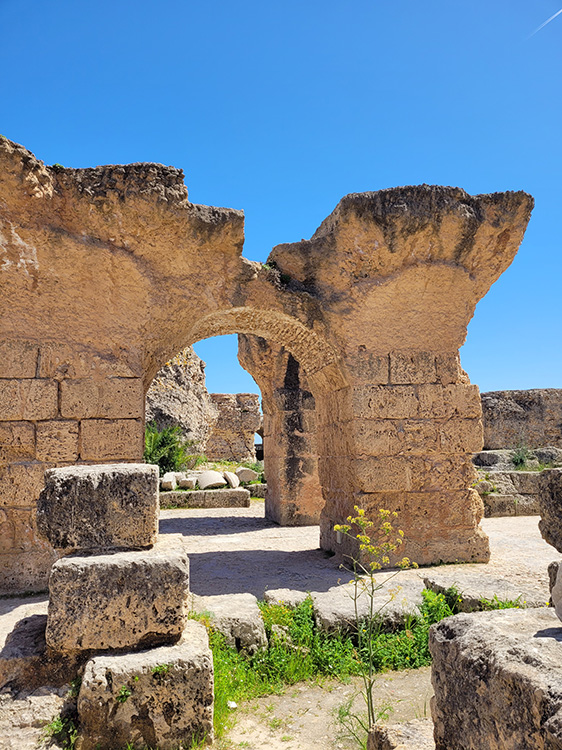
The highlight of the Carthage leg, though, was the Baths of Antoninus: one of the best-preserved sites in the area and probably the most visually striking. Once a massive complex of hot, warm, and cold baths, pools and lounging areas set right on the sea, it’s now an atmospheric labyrinth of underground ruins to wander through.
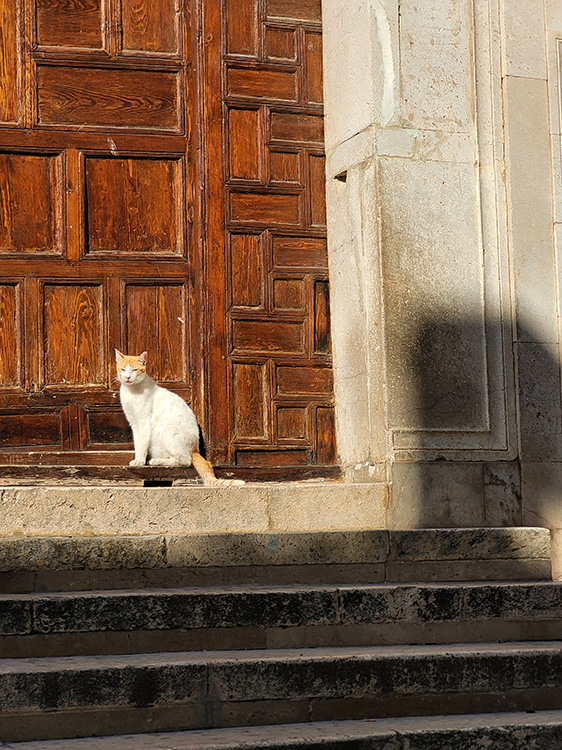
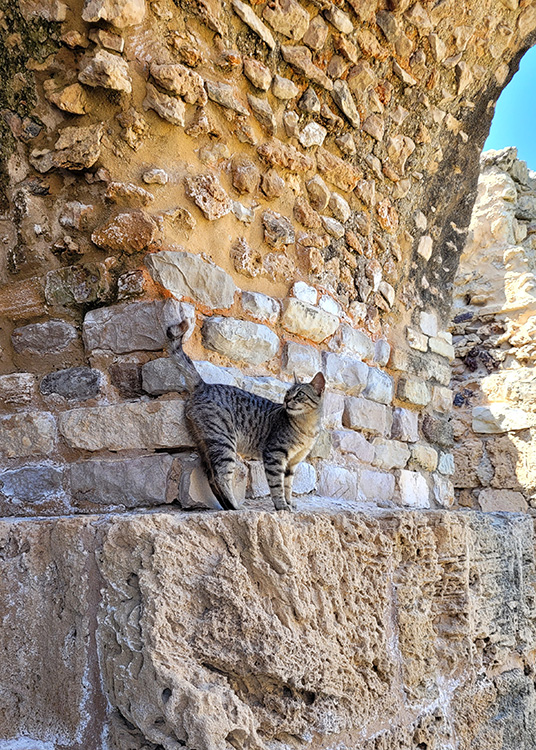
I also had a small encounter there with a young cat who had climbed up a column and was too scared to jump back down. He meowed at me, I encouraged him, he purred, and eventually made the leap. There are a lot of cats in Tunisia, and not all of them are in good shape… It broke my heart a little. But this one seemed fine and proud of himself.
Lunch And Blue Alleys In Sidi Bou Said
By the time we reached Sidi Bou Said, it was 2 p.m. and hunger was making its presence very known. Lunch, thankfully, was included in the tour: a brick (a crispy pastry filled with egg and herbs), followed by a fish couscous, and finished with fresh oranges and strawberries. Simple, satisfying, and delicious.
After lunch, we drove up to the most scenic part of Sidi Bou Said. My guide gave me a brief introduction and then settled at a café with a cigarette while I explored on my own which, honestly, was exactly what I needed.
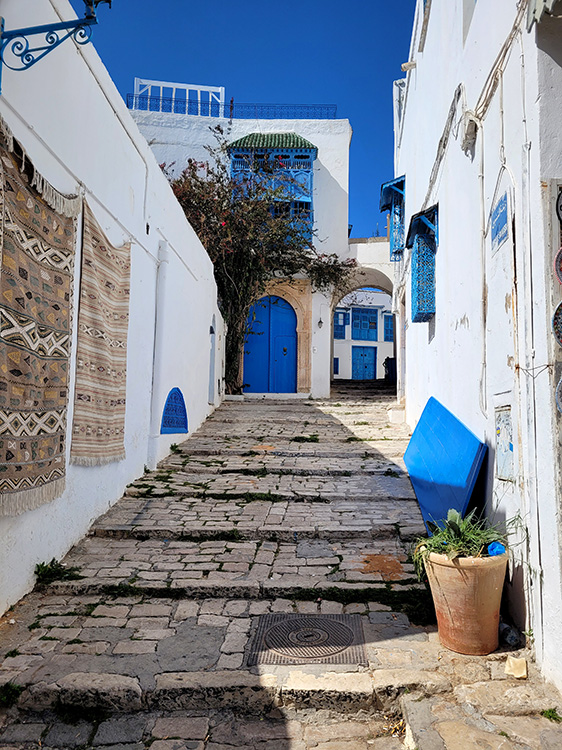
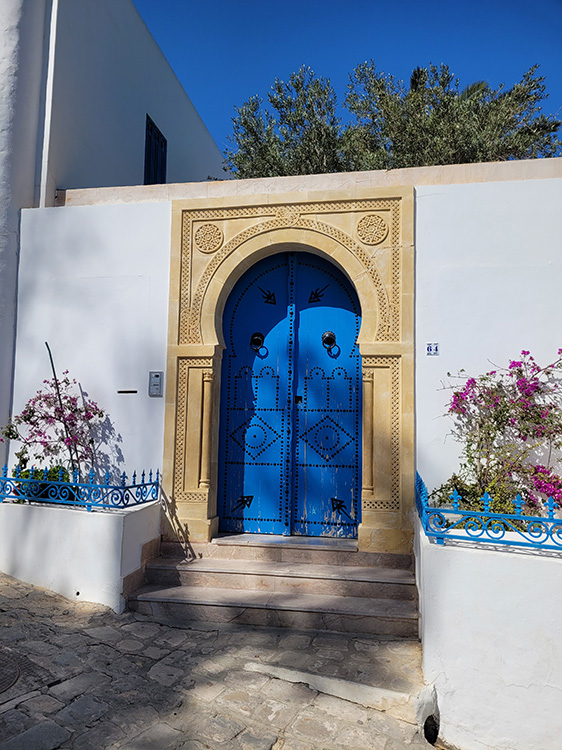
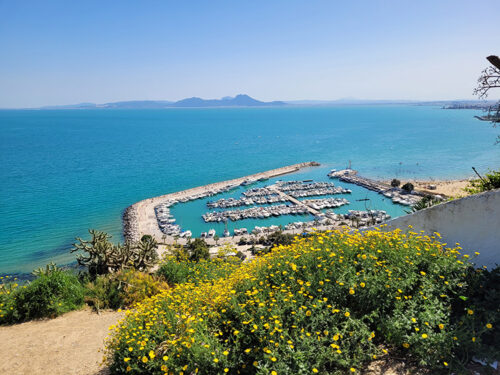
Sidi Bou Said is wildly touristy. The streets are blue and white, reminiscent of Santorini, and at the end of the main avenue, the view opens up over the city and the sea. It is gorgeous. I took my time photographing doorways and windows and that glittering stretch of Mediterranean. It was so warm, I felt like I’d stumbled into midsummer. (It was April.)
On my way back, I stopped to buy a few souvenirs and had a nice little chat with the vendor before rejoining my guide. Then it was back in the car, back to the center of Tunis.
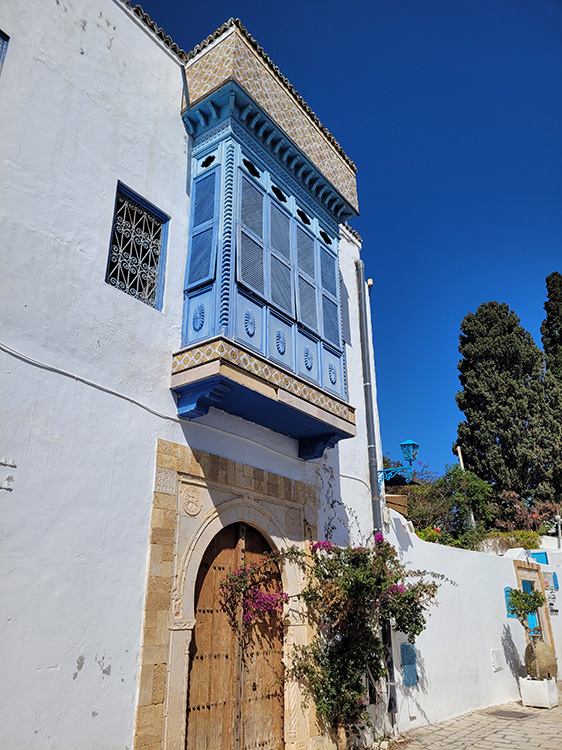
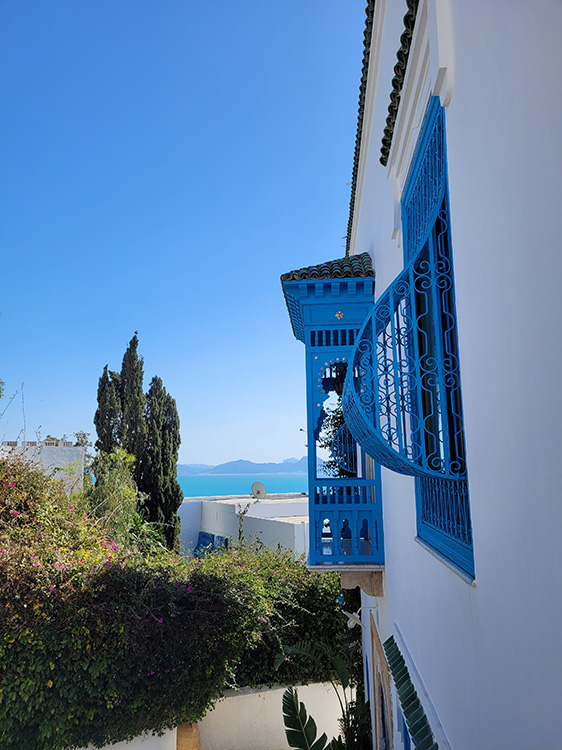
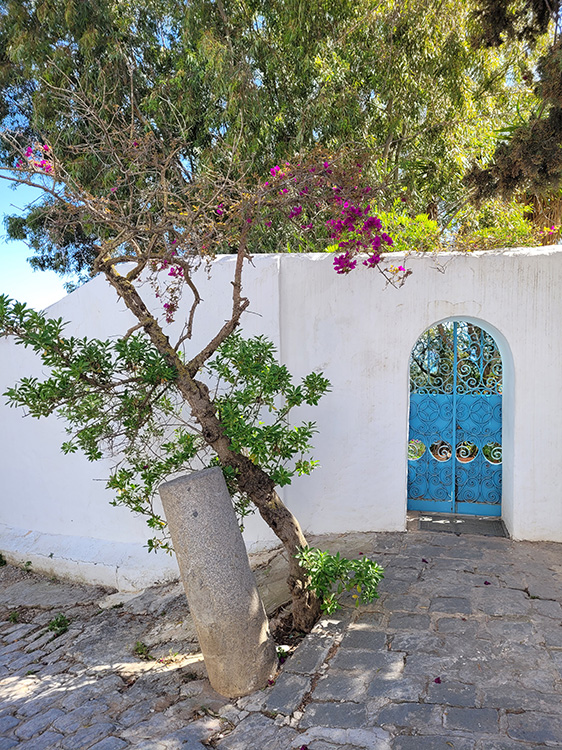
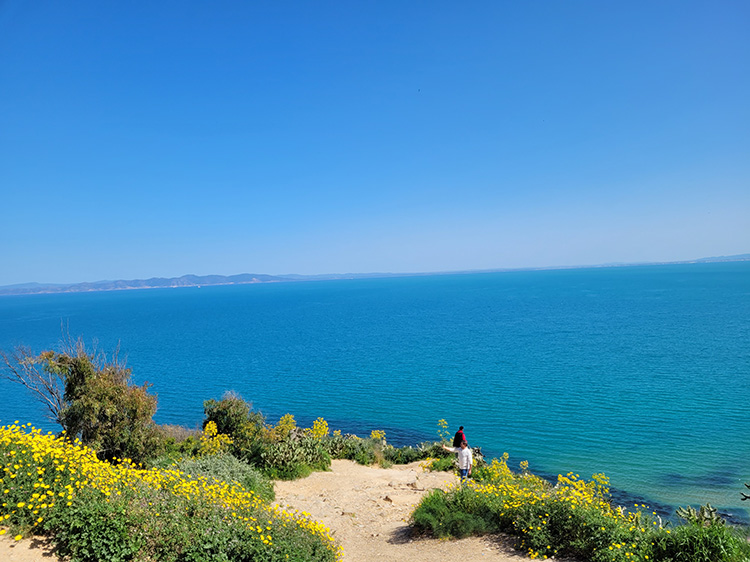
The tour was completely worth it! The day felt full in the best possible way: A whole slice of Tunisian history and culture in a single day, for 99 euros. If you’re traveling solo, especially as a woman, an organized tour can take a lot of the mental load off your shoulders. And don’t forget to tip your guide at the end!
Discover more from London Frenchy Around the Globe
Subscribe to get the latest posts sent to your email.