
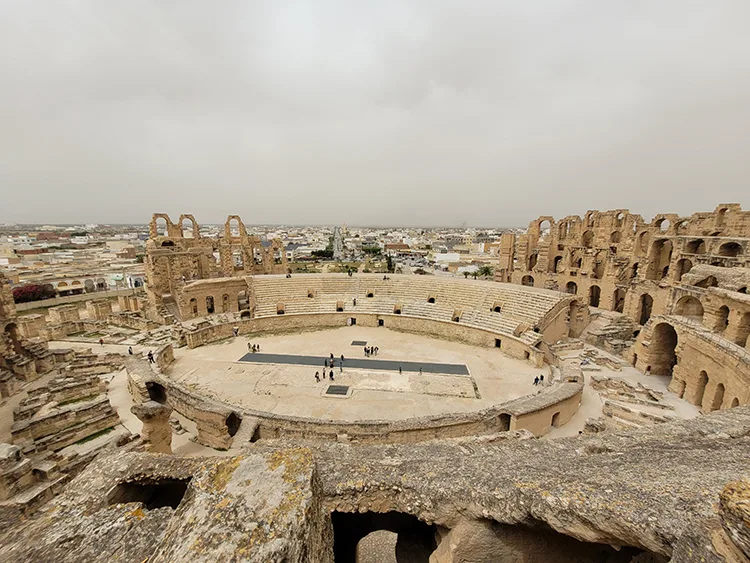
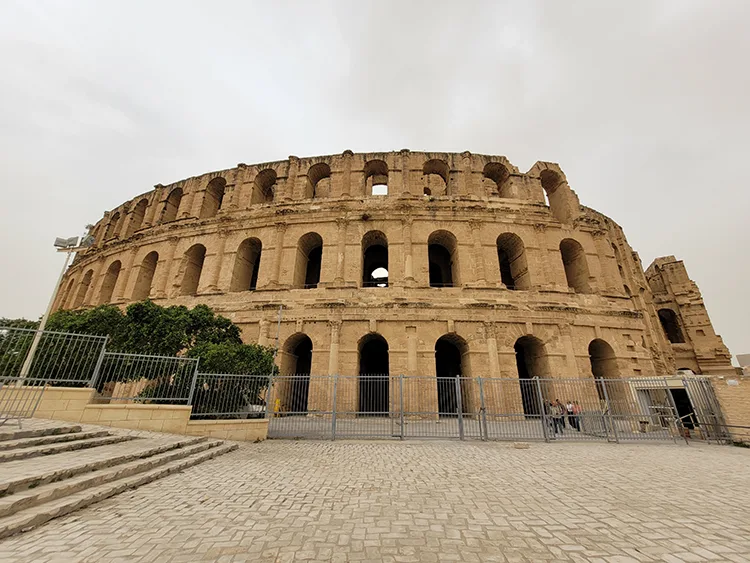
The day before, the guide from my first organized tour in Tunisia had promised me I was going to love El Jem. And he was right! Unlike the scattered ruins of Carthage, where you need a good imagination and a bit of patience to picture what once stood there, El Jem’s amphitheater is still standing, and standing incredibly tall.
El Jem’s Roman Colosseum: Tunisia’s Answer To Rome
After Kairouan, we headed to El Jem. During the visit, our guide for the day didn’t use the word “amphitheater” much, preferring to call it the “Colosseum.” The comparison to the one in Rome came up constantly. Tunisians are proud of this monument, and just like at the Bardo Museum, I could sense it mattered to them to show that when it comes to culture, history, and monuments, they have nothing to envy Italy or the Vatican for.
A UNESCO World Heritage Site Modeled On Rome
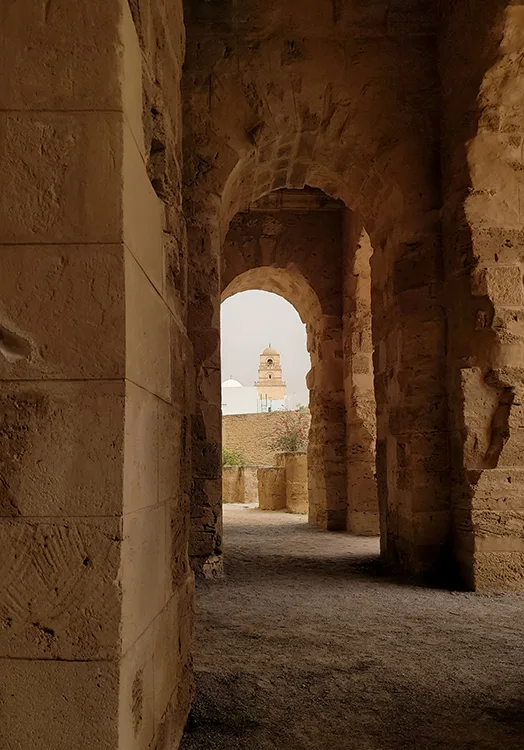
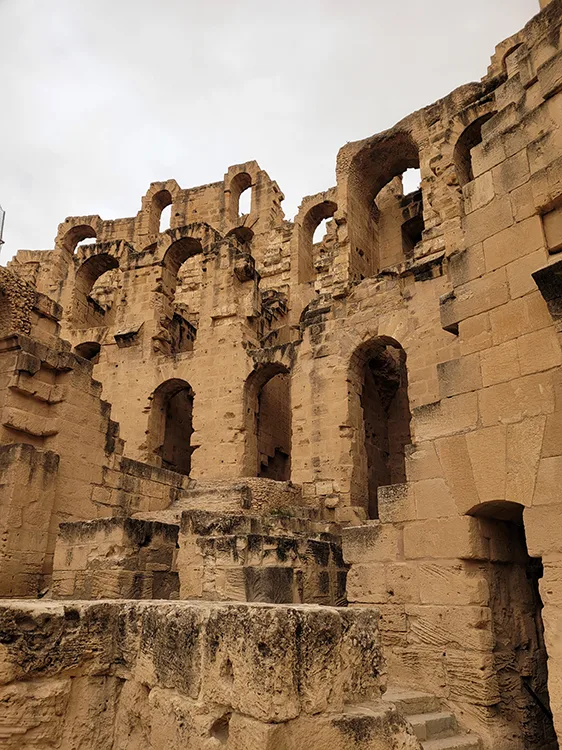
This amphitheater, the Colosseum of Thysdrus, was a magnificent testament to Roman architecture in Africa, and it’s actually a UNESCO World Heritage site. Its construction followed the model of the Colosseum in Rome, though it wasn’t identical. According to the guide, it was actually an improvement, since there were no blind spots for the audience in El Jem.
It could hold more than 30,000 spectators and was recognized as one of the largest amphitheaters in the world.
Exploring El Jem
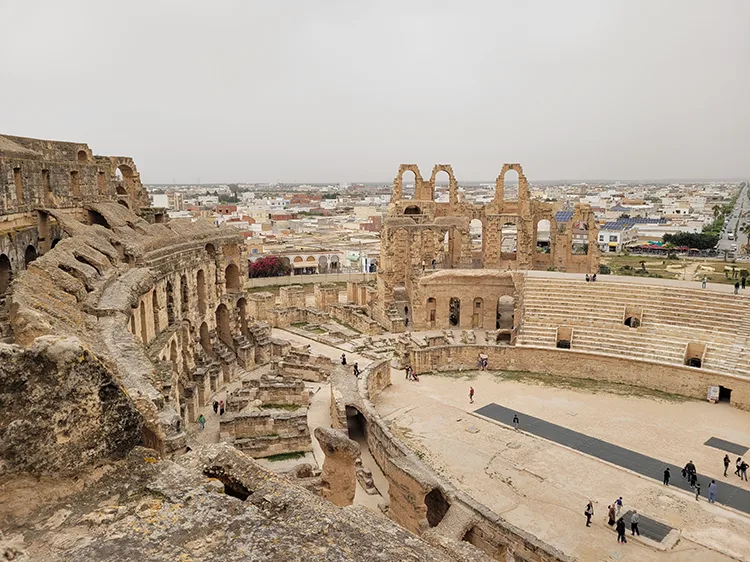
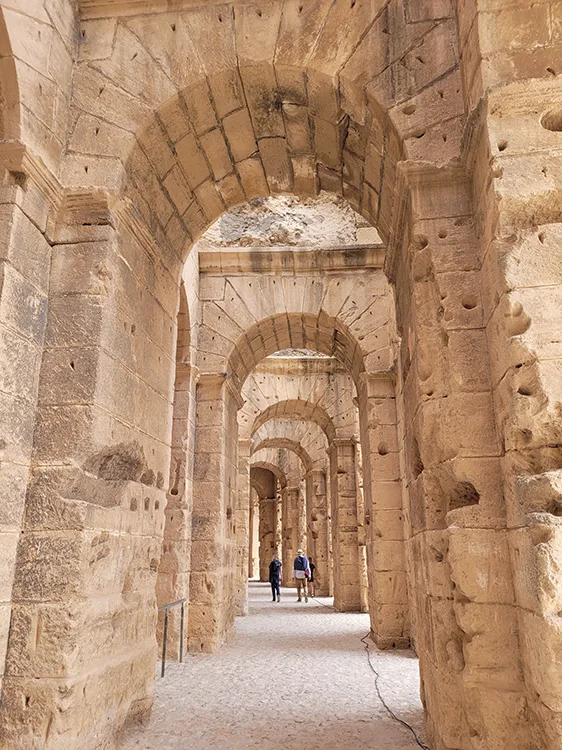
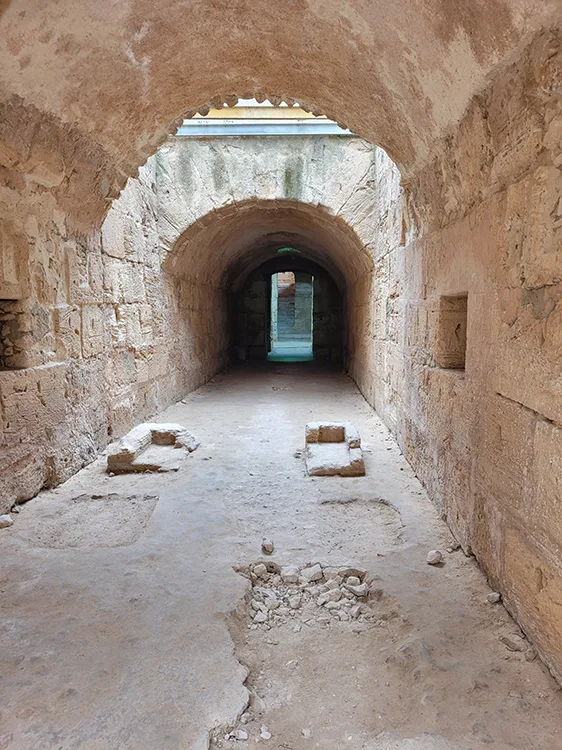
We first visited the arena, where I felt tiny facing the tiers that rose up so high. Then we headed into the underground passages, where the lions had been kept before being hoisted up into the arena on a pulley system and released for the fights.
Finally, we climbed the stairs one by one to reach the top of the Colosseum and took in the full scale of it. Behind it, I could see El Jem’s main square, and further still, the town itself.
The visit wrapped up and I absolutely loved it. I’d taken it all in, but I had to admit I was starving. It was 1pm, I’d had breakfast before 7am, and I’d already scarfed down the two granola bars I’d brought at the start of the tour.
El Jem: Good To Know Before You Go
I didn’t know what the entrance fee was because I was partof a tour. After some research, I can tell you that the grouped ticket covers both the amphitheater and the El Jem Museum (that I didn’t visit). Entry costs around 12 dinars (about 4 euros) for non-residents, with a lower rate for Tunisian residents.
Opening hours shift depending on the season: from 8am to 5:30pm in winter and 8am to 6:30pm in summer. Opening times are shortened during Ramadan: from 8am to 5pm.
A Quick (Fiery) Lunch On The Go
The guide said we’d stop at a gas station to eat: 10 minutes, 15 tops, to grab something we could eat in the minibus. I ordered an escalope sandwich. What I hadn’t realized was that the sandwiches weren’t premade, so it took a bit more time to get my food. I was stressed because I didn’t’ want to be late. The vendor asked me what fillings I wanted: Green stuff (lettuce, I assumed), sure, a tiny bit of harissa, tomato, a few other things. Then he warmed up the bread and handed me the sandwich along with some cold fries. My travel companion had ordered something with cheese. Sandwiches in hand, we hurried back to the minibus, no time to lose.
A Spicy Surprise
On the road, I started eating my sandwich and quickly realized something… The green stuff wasn’t lettuce at all, it was chili pepper!
By the time I was halfway through the sandwich, my lips were on fire, I’d drunk half a bottle of water, put on some lip balm, and blown my nose twice. I somehow managed to finish it and wiped away a tear.
With any luck, no one had noticed in the dim light, and my face would be back to a normal color by the time we got off. I popped mint candy after mint candy trying to cool things down.
Monastir: The Oldest Ribat in North Africa
Hammamet Or Monastir: That Is The Question
Earlier in the day, the guide had asked us to choose between Hammamet and Monastir for the last stop of the trip. The ribat of Monastir was the planned visit in the itinerary, and my travel companion preferred sticking with that choice rather than visiting the ribat of Hammamet (less historic and less impressive) and its medina. That worked for me too.
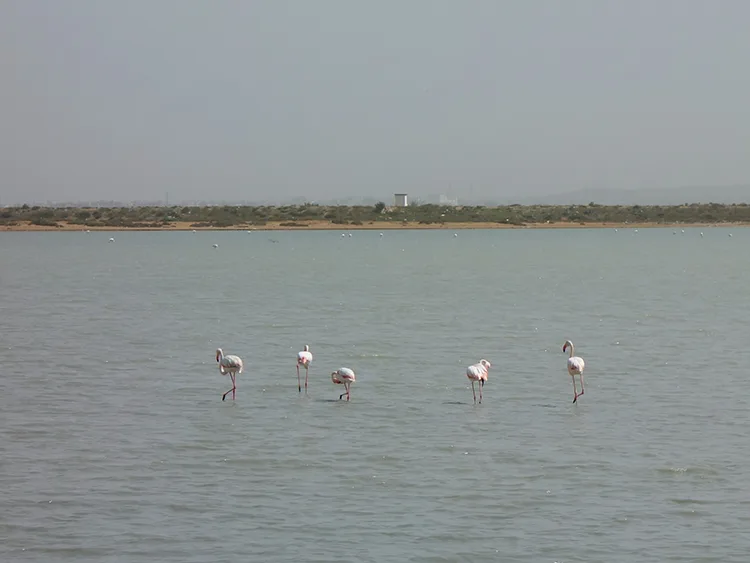
Both towns sit right on the coast. Along the way, we passed a large body of water full of pink flamingos. The guide asked the driver to make a stop so we could take photos. It was beautiful, but I felt a pang of sadness seeing all the trash piled up on the banks.
Inside the Ribat: A Fortress Once Guarded By Warrior Monks
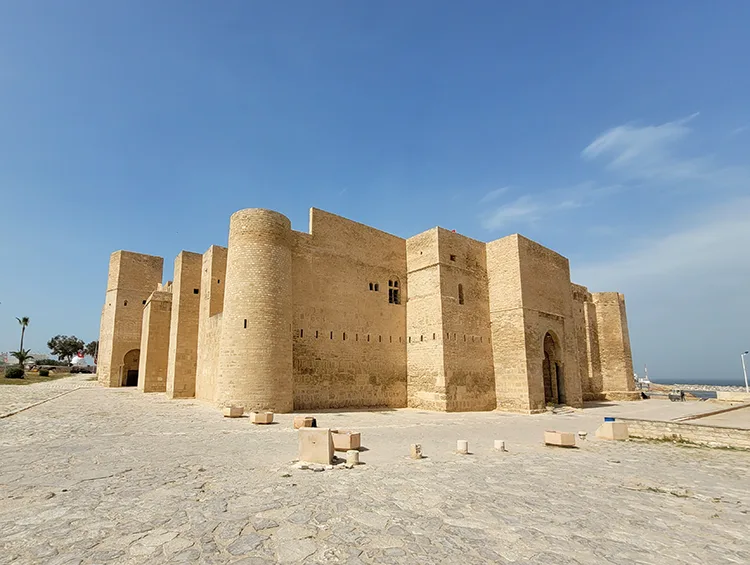
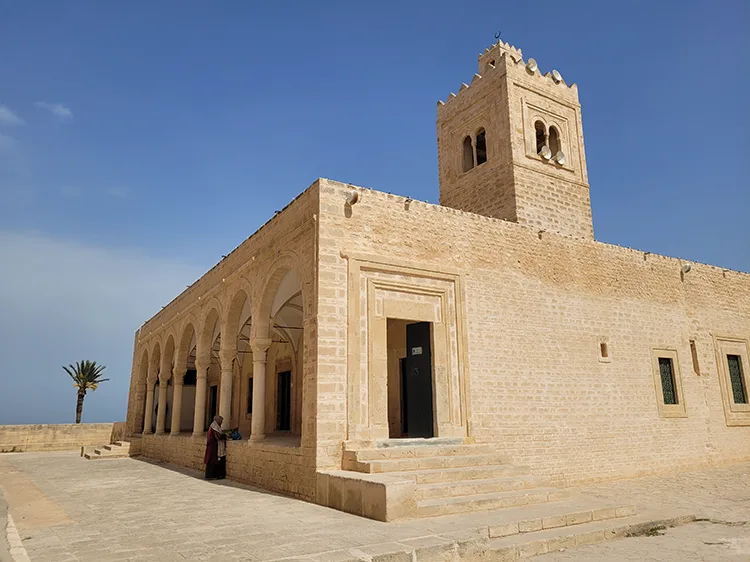
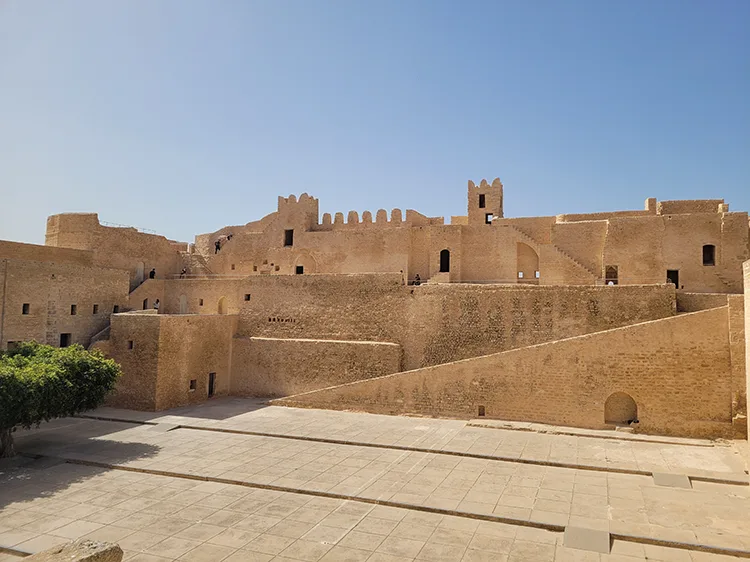
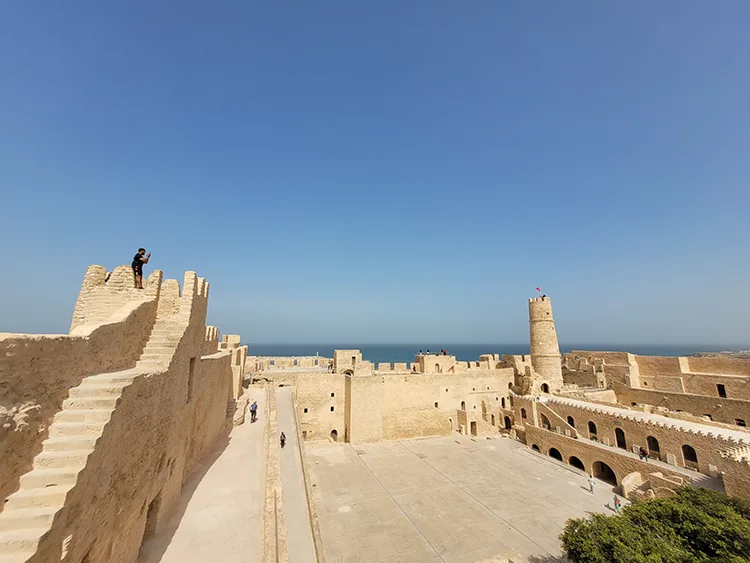
Once we arrived in Monastir, we went straight to visit the ribat, a large fortress. It’s the oldest ribat in North Africa, and it was once protected by warrior monks. Our guide told us it also housed women who lived here alongside the monks.
We started by visiting a small museum that I didn’t find especially exciting. Then the guide told us we were free to explore the ribat on our own, suggesting we climb up to the top of the watchtower. He gave us a time to be back down for departure, and I realized it would leave us only 20 minutes to visit the whole place. That’s the problem with organized tours, you don’t have time to wander. That was ok, I knew what I signed up for. Still, I looked at the size of the ribat and thought that if I wanted to make the full loop, I’d better hurry.
Climbing The Watchtower and Racing The Clock
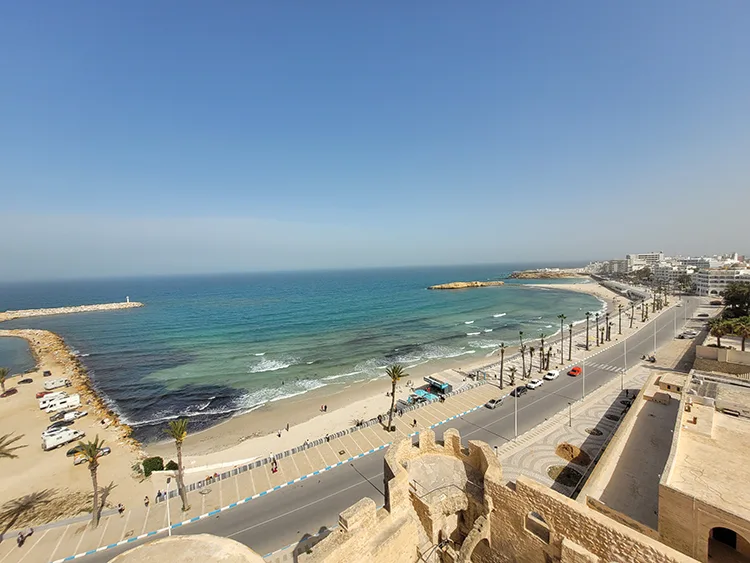
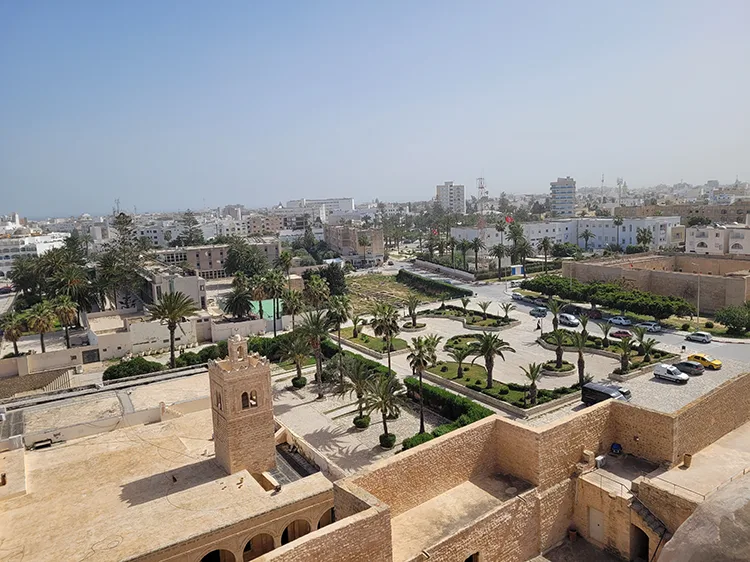
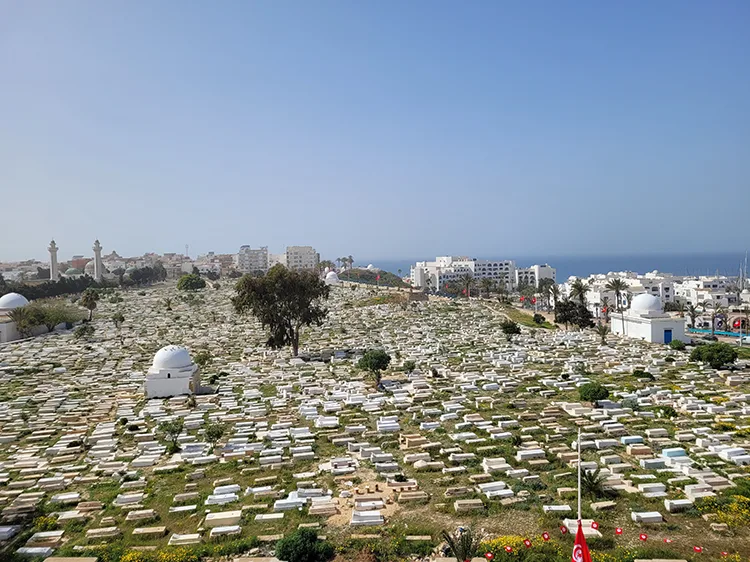
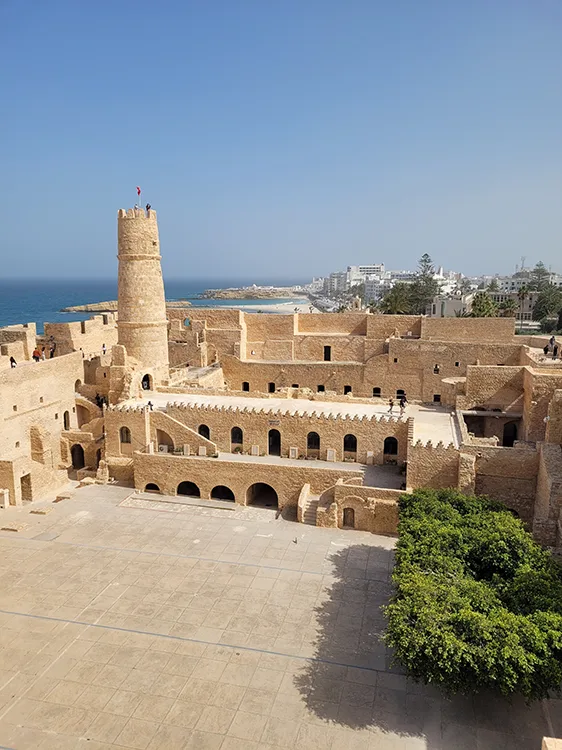
So, off I went to the watchtower and its incredibly narrow spiral staircase. Once at the top, I realized the tower itself was just as narrow, barely any room to move. The view was beautiful, overlooking the city and the waterfront. But the waves and the tightness of the tower made me dizzy. My travel companion was just reaching the top as I started heading back down. I hurried to the opposite side, eager to see the ribat from the other high point. From there, you could see the sea and the cemetery, with Bourguiba’s massive tomb.
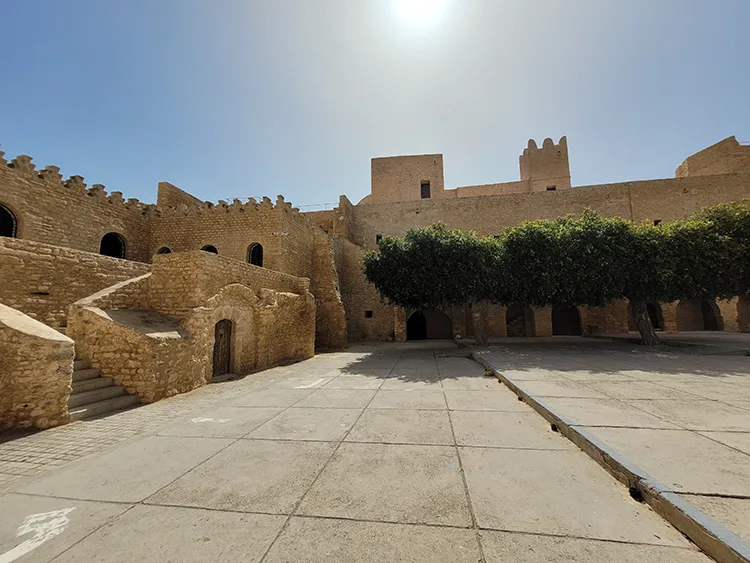
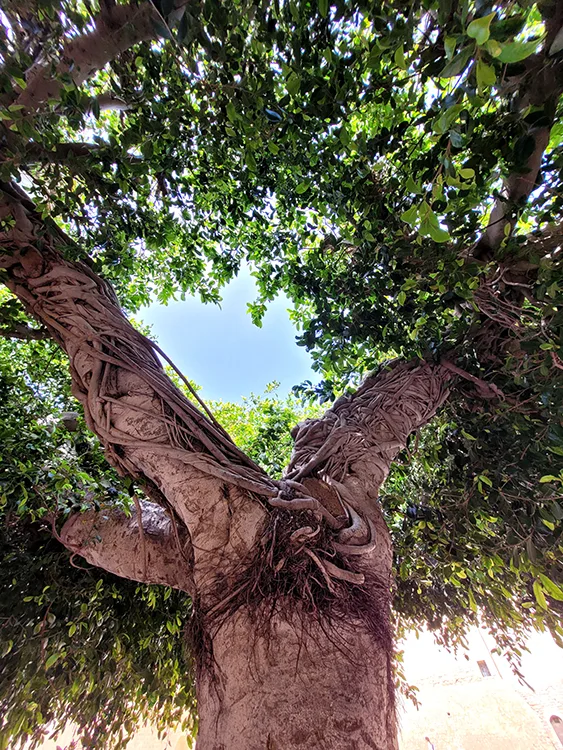
A little less dizzying on that side, but there were still some heart pounding moments on the narrow, uneven steps leading up to the battlements. I ventured a bit along the rampart walk before heading back to the central courtyard, where a gnarled old tree offered a patch of shade.
A quick bathroom stop, and just like that, it was exactly 20 minutes! We climbed back into the minibus and hit the road for Tunis.
Monastir Ribat: Good To Know Before You Go
I didn’t pay for entrance directly, since it was included in the organized tour, but entry to the ribat isn’t free. According to Olivia Marsh, the price is modest: 7 dinars for visitors, or 5 dinars if you’re a Tunisian resident. Bringing a camera adds another dinar to the ticket.
Note that the fee also goes toward keeping the site accessible for tourists, with things like information panels and restrooms on site (thank you!).
A Bit Too Fast Paced
Doing this tour let me visit several sites in a single day, which was ideal for a short trip since I wanted to see as much as possible. Still, the pace left something to be desired. We didn’t have much time at each stop, and the whole day felt rushed from start to finish.
The lunch was probably what bothered me most. Given how expensive the tour was, I think we should have had time to properly sit down for a Tunisian meal instead of grabbing a quick sandwich at a gas station.
I understand the appeal of moving efficiently, but we were back in Tunis by 3 or 4pm. Looking back, a slower pace, with more time to actually enjoy each stop, and perhaps a slightly longer itinerary, would have made for a better day overall. As it was, we spent more time on the road than actually visiting.
Share the post "El Jem’s Roman Colosseum And Monastir’s Ribat: A Day Trip Through Tunisia’s History"
Discover more from London Frenchy Around the Globe
Subscribe to get the latest posts sent to your email.